



 Schedule a Demo
Recruitment in Retail: Building the Workforce of Tomorrow
The retail sector stands as a cornerstone of the global economy and a powerful driver of growth and employment. Its importance goes far beyond being a point of sale for goods and services; it contributes significantly to GDP, generates millions of jobs, and serves as a vital indicator of overall economic health. With rapid technological shifts and the rise of e-commerce, the nature of work in retail has transformed, creating new roles that demand advanced skills, while increasing the need for flexibility and adaptability.
This guide aims to explore the diverse dimensions of recruitment in the retail sector, from in-demand roles and talent attraction strategies to the impact of digital transformation and artificial intelligence, offering valuable insights to HR professionals and business leaders to stay ahead of change and build successful teams.
Chapter One: The Uniqueness of Recruitment in the Retail Sector

The retail sector is defined by its unique nature, combining high competitiveness with the need to quickly adapt to technological changes and evolving customer behaviors. This sector offers a wide range of career opportunities that require specialized skills and competencies. In this guide, we explore the roles within retail, their diversity, requirements, and how they are shaped by digital transformation and the rise of e-commerce.
The Nature of Roles in Retail
Retail is a dynamic and fast-paced work environment that offers a wide variety of job roles, which can be categorized into the following:
Frontline Roles
Focused on direct customer interaction—answering inquiries, providing assistance, driving sales, and enhancing the customer experience. These roles form the foundation of traditional retail operations and are often entry-level positions. Key examples include:
- Sales Associate
- Cashier
- Customer Service Representative
- Product Promoter
Back-End Roles
These support operations and logistics ensure that shelves are stocked, orders are fulfilled on time, and stores run smoothly. Such roles often demand physical effort, discipline, and accuracy. Key examples include:
- Inventory Clerk
- Visual Merchandising Coordinator
- Security Officer
- Delivery Driver
- Purchasing Controller
Management and Supervisory Roles
These include leadership levels focused on planning, organizing, evaluating, and making operational decisions to meet store objectives, manage teams, and align with policies and procedures. Examples include:
- Regional Manager
- Department Manager or Supervisor
- Warehouse Manager
Administrative Support and Shared Services Roles
These roles provide the administrative, financial, and technical infrastructure that enables all other teams to perform effectively. They are essential for stability and operational sustainability. Examples include:
- Human Resources
- Finance and Accounting
- Procurement and Supply Chain
- Information Technology
Diversity of Roles in Retail
Diversity in retail hiring helps build teams that reflect the wide variety of customers from different cultures, age groups, and backgrounds. This diversity manifests in multiple ways:
- Combining long-term experience with modern skill sets to support both traditional and online retail models.
- Bringing together different educational backgrounds and professional expertise, technical, operational, or managerial.
- Offering a mix of work arrangements such as full-time, part-time, seasonal, or flexible contracts to address peak periods that demand additional staff.
- Harnessing varied abilities, languages, analytical and physical skills to fill talent gaps in the sector.
- Expanding geographically at local and international levels, requiring diverse teams that can adapt to different labor markets and minimize the impact of geographical factors on hiring.
Evolving Role Requirements with the Rise of Digital Transformation
The digital revolution has radically reshaped the retail landscape, not only in how consumers shop but also in the skills and talent required to succeed in this sector. E-commerce has given rise to new roles that previously did not exist, focusing on managing online operations, analyzing data, and ensuring a seamless user experience. These roles demand advanced technical and analytical skills, along with a deep understanding of customer behavior, whether their journey begins online or in-store. Examples include:
- Digital Marketing Specialist
- Data Entry Clerk
- Data Analyst
- Photographer & Graphic Designer
- Supply Chain Acceleration Officer
- User Experience (UX) Specialist
This shift has also made digital literacy, task flexibility, problem-solving, continuous learning, and emotional intelligence essential skills for thriving in a fast-changing environment. For example, a sales associate once focused solely on in-store transactions and product displays. Today, the same role has evolved into that of a customer advisor—guiding shoppers through their purchasing journey, using tablets or mobile POS systems to check inventory, provide personalized recommendations, or process pre-placed online orders.
Similarly, warehouse employees in traditional stores used to concentrate on internal storage and manual shelf stocking. In e-commerce settings, however, their role has expanded to managing inventory through digital systems, preparing and fulfilling online orders, and coordinating shipping and returns.
High Turnover Rates in the Retail Sector
Retail is one of the industries most affected by high employee turnover, with annual attrition often exceeding 60%—particularly in low-skilled, part-time, seasonal, or customer-facing roles. In contrast, corporate or administrative positions tend to enjoy greater stability.
While high turnover in a fast-changing, seasonal industry like retail can bring some benefits, such as:
- Introducing fresh ideas and skills that drive innovation and adaptability to market shifts.
- Reducing short-term labor costs by replacing higher-paid employees with lower-wage, part-time, or seasonal workers.
- Filtering out underperforming or disengaged employees, ultimately improving overall efficiency.
- Increasing diversity and inclusion, as a steady influx of employees from varied cultural, age, and professional backgrounds, enriches organizational culture.
This phenomenon also presents significant challenges, extending far beyond workforce instability to include:
- Higher costs for recruitment, onboarding, training, and lost productivity during replacement and learning periods.
- Lower productivity, as new employees require time to reach desired performance levels.
- A negative impact on customer service quality, since inexperienced employees often lack the knowledge to deliver consistent, high-standard experiences.
- Reduced morale and burnout among remaining employees who must shoulder heavier workloads.
Key Drivers of High Turnover in Retail
- Low wages and insufficient benefits, such as limited health coverage or lack of retirement plans, particularly in entry-level roles like sales associates or cashiers.
- Rigid scheduling and limited flexibility, with shifts often covering evenings, weekends, and holidays, alongside irregular or constantly changing rosters.
- Lack of career development opportunities, with few clear pathways for advancement or skill-building.
- Challenging work environments, from dealing with difficult customers to meeting sales targets and standing for extended hours.
- Difficulty adapting to new role requirements tied to e-commerce, such as complex software systems, KPI tracking, or digital skills demands.
- Competition from other industries (hospitality, logistics) that may offer better pay or working conditions.
Competency Requirements in Retail and How to Assess Them
In today’s fast-evolving retail environment, product knowledge alone is no longer enough. Beyond job-specific expertise—whether administrative, financial, or operational—employees now need a unique mix of competencies that allows them to adapt to constant change, deliver exceptional customer experiences, and contribute meaningfully to business goals.
Behavioral Competencies
These soft skills are critical, as they directly shape customer interactions, teamwork, and adaptability in retail’s dynamic environment. Key examples include:
- Empathy: Understanding customer emotions to create lasting connections and ensure they feel valued.
- Active Listening: Going beyond words to interpret customer needs, including non-verbal cues—and providing tailored solutions.
- Problem-Solving: Thinking quickly, weighing options, and finding creative solutions to unexpected issues, whether product-related or customer complaints.
- Flexibility & Adaptability: Adjusting to rapid changes in products, technology, and customer expectations.
- Communication Skills: Conveying information clearly, verbally and in writing to customers, colleagues, and managers.
- Teamwork & Collaboration: Contributing effectively to group goals.
- Initiative & Accountability: Taking responsibility without being prompted and seeking ways to improve performance.
- Resilience Under Pressure: Remaining calm and effective during peak seasons or stressful situations.
Technical/Practical Competencies
These refer to hands-on capabilities that ensure day-to-day effectiveness, including:
- Product Knowledge: A deep understanding of features, benefits, and uses to provide accurate and persuasive recommendations.
- Sales & Persuasion Skills: Identifying opportunities, offering value, and closing deals.
- Inventory Management: Familiarity with stock control, receiving, storage, display, and assisting with audits.
- Visual Merchandising Skills: Presenting products attractively to maximize sales and improve the shopping experience.
- Time Management, Organization, and Decision-Making: Prioritizing tasks, managing multiple responsibilities, and meeting deadlines.
Technical Skills
Digital skills have become essential for navigating retail technologies, especially with the growing reliance on software, digital tools, and e-commerce platforms. Key areas include:
- Point-of-Sale (POS) Systems: Efficiently operating POS systems to process cash and card transactions, manage returns, and ensure smooth checkout experiences.
- Basic Digital Literacy: Using computers, in-store applications, specialized software, customer relationship management (CRM) systems, and email tools.
- E-commerce Understanding: Familiarity with online retail platforms, digital marketing fundamentals, and data analytics.
- Cybersecurity Awareness: Knowing basic practices to safeguard both customer and company data.
- AI Proficiency: Using artificial intelligence tools for personalized customer experiences, interpreting outputs, forecasting demand, and making product recommendations.
Managerial and Interpersonal Skills
Managerial and interpersonal competencies play a vital role in ensuring success, building cohesive teams, boosting productivity, and enhancing the candidate experience in retail. These include:
- Leadership: Inspiring teams, supporting skill development, distributing workload fairly, and acting with integrity and accountability.
- Delegation: Assigning tasks to capable employees to maintain focus on core responsibilities.
- Analytical Skills: Examining sales figures, monitoring trends, and forecasting future sales to guide planning and initiatives.
- Motivation & Engagement: Taking initiative, thinking quickly, and maintaining enthusiasm even when handling repetitive tasks, while staying aligned with company values.
How to Assess the Required Skills
Resumes alone are insufficient to evaluate retail competencies. Companies need comprehensive, multi-layered assessment methods that provide a clear picture of candidates’ capabilities and readiness to thrive in the workplace, such as:
- Behavioral Interviews: Drawing on candidates’ past experiences to reveal how they have acted in real workplace situations.
- Practical Skill Tests: Assigning real-world tasks—such as analyzing POS data or creating marketing content—and evaluating the outcomes.
- Situational Judgment Tests (SJTs): Presenting realistic workplace scenarios and asking candidates to choose the best course of action, offering insights into decision-making under pressure.
- Pre-Employment Online Assessments: Measuring personality traits, cognitive abilities, and language skills, often used to efficiently filter large applicant pools.
- Live or Recorded Video Interviews: Providing opportunities to evaluate communication and presentation skills, while enabling recruitment teams to review responses asynchronously.
Cultural Fit Assessments: Ensuring candidate values align with the company’s culture and vision, which fosters stronger engagement and long-term commitment.
.
Chapter Two: Candidate Attraction Strategies in the Retail Sector

The retail sector faces unique hiring challenges—fast hiring cycles, high application volumes, and a constant need for adaptable, frontline-ready talent. To succeed, retailers must adopt integrated strategies that strengthen their ability to attract and retain the right candidates.
Building a Strong Employer Brand
“Your brand is what other people say about you when you’re not in the room.”
—Jeff Bezos, Founder of Amazon
In retail—where competition is fierce and turnover rates are high—a strong employer brand is no longer optional; it is a strategic necessity. Candidates, especially those seeking supportive, engaging, and flexible workplaces, are drawn to employers whose values and culture match their expectations.
Key elements of a strong retail employer brand include:
- Defining brand personality: Clarify how you want to be perceived, highlight the employee’s value proposition, and showcase unique benefits such as competitive pay, staff discounts, and flexible shifts.
- Focusing on supportive leadership: Invest in training supervisors on emotional intelligence, feedback, and communication skills, while linking manager performance to employee engagement and retention.
- Turning employee experiences into marketing assets: Share real employee stories—successes, challenges, and day-to-day realities. Encourage standout employees to act as brand ambassadors on social media.
- Strengthening digital presence: Tailor content to each platform. Use LinkedIn and Bayt.com to highlight career paths and growth opportunities, while posting behind-the-scenes videos on social media to showcase authentic workplace culture.
- Showcasing career growth: Combat the stereotype of retail as “just temporary work” by celebrating internal promotions and sharing success stories online.
- Boosting morale through recognition: Go beyond financial rewards—offer immediate verbal recognition, regular acknowledgment of achievements, and attractive non-monetary perks like flexible shifts or extra time off.
- Championing communication, diversity, and inclusion: Open communication channels, encourage employee input through suggestion boxes, and actively recruit diverse talent that reflects customer demographics.
Case Example – Lidl
European supermarket giant Lidl launched a storytelling campaign showcasing authentic employee experiences through quotes, images, and videos. Instead of polished promises, candidates saw realistic portrayals of working life, enhancing credibility and trust.
Crafting Smart, Compelling Job Advertisements
What do retail job seekers really look for in job ads?
- 70% value clear and recognizable job titles above all else.
- 24% prioritize flexible hours even more than pay or promotion opportunities.
- 84% check company websites for cultural insights, even if not mentioned in the ad.
- Only 34% consider education requirements essential.
Source: What retail job seekers really look for in job adverts
A well-crafted job ad is more than a vacancy notice—it’s a marketing tool that differentiates your company, excites qualified candidates, and reduces turnover.
Best practices for retail job ads include:
- Use clear, engaging titles that accurately reflect the role.
- Introduce the company with a short overview of its vision, culture, and values.
- Provide specific role descriptions that emphasize impact and expected outcomes.
- Clarify required vs. preferred qualifications, highlighting behavioral and technical competencies relevant to retail.
- Highlight the employee value proposition: growth opportunities, flexibility, and perks.
- Use inclusive language and a clear call to action with straightforward application instructions.
- Add visual elements—photos or graphics—to bring the workplace to life, and ensure mobile-friendly formatting with search-optimized keywords.
- Stay authentic: avoid vague promises and overly administrative descriptions that fail to show the role’s value.
Case Example – Zappos

The online retailer Zappos emphasizes cultural fit in its job ads, prioritizing values and unique ways of working over traditional qualifications. This approach attracts candidates who are not just skilled but also culturally aligned.
Precision Targeting of Candidate Segments
Smart targeting means matching the right roles with the right talent pools, rather than broadcasting generic ads and hoping for results. Retailers must adopt data-driven, candidate-centric strategies that identify, attract, and engage the most suitable candidates.
Steps for effective targeting:
- Define hiring objectives: Clarify role requirements and key competencies.
- Build candidate personas: Include demographics, experience, skills, motivations, and challenges.
- Segment talent pools: Organize by role type and candidate characteristics.
- Tailor messages: Speak directly to each segment’s needs—e.g., highlight flexible shifts and discounts for students, leadership opportunities for professionals, or stability and clear pay structures for part-timers.
- Choose the right channels: Use platforms and networks where target candidates are most active.
- Leverage data: Use both internal (high-performing employee profiles) and external (labor market reports, surveys) data to refine targeting.
- Track and optimize: Monitor metrics such as application volume, quality, and retention rates to adjust campaigns accordingly.
Case Example – H&M Canada
Facing difficulties in attracting the right retail talent, H&M Canada launched a strategy to hire “true fans” of the brand. By developing detailed candidate personas based on passion for the company, they were able to target messages effectively, recruit brand enthusiasts, and strengthen both employee and customer engagement.
Source: HireNext Case Study: H&M Canada
Effective Recruitment Channels
Selecting the right recruitment channels depends on several factors: the target audience (e.g., youth, students, professionals), the nature of the roles (administrative, frontline, seasonal), and practical considerations such as geographic reach, cost, and whether direct or digital interaction is more suitable.
A multi-channel approach is recommended to broaden access to diverse, qualified candidates rather than relying on a single channel, which may limit diversity.
Key recruitment channels for the retail sector include:
- Online Job Platforms: Allow employers to reach large pools of job seekers, with the ability to optimize postings using keywords to attract candidates with retail or hourly-work experience (e.g., Bayt.com).
- Social Media: Used to showcase company culture and promote vacancies through engaging content and targeted ad campaigns. LinkedIn is effective for professionals, while platforms like Instagram and TikTok are ideal for reaching younger audiences.
- Employee Referral Programs: Leverage current staff to recommend candidates familiar with company culture. While highly effective in retail, the 2025 Retail Recruitment Benchmark Report noted that referrals were among the least used channels, despite their ability to attract quality talent.
- Flexible Work Platforms: Focus on part-time, gig, or variable schedules to engage students, temporary workers, or those seeking non-traditional roles.
- Job Fairs and Hiring Events: Provide direct interaction with candidates, particularly at universities or company-hosted events.
- Company Career Page: Attracts candidates specifically interested in the brand by highlighting culture, values, and employee benefits.
- Text Messaging and Google Ads: Enable quick outreach to demographics less active on social media, while targeted Google Ads help engage passive candidates who may not be actively job-hunting.
- In-Store Recruitment: Transform stores into interactive recruitment hubs by placing QR codes linking to job pages, equipping staff with referral cards to hand to standout customers, or hosting open hiring days that allow candidates to meet managers on-site.
- Internal Promotions: Advertising roles internally first boosts morale and demonstrates clear career progression.
- Partnerships with Schools and Staffing Agencies: Build sustainable talent pipelines for entry-level or seasonal roles, especially targeting students and younger workers.
Recruitment channels don’t always need to be paid ads or job boards—they can also be woven into everyday customer experiences.
Case Example – IKEA Australia

Instead of relying solely on traditional job ads, IKEA Australia used its iconic flat-pack boxes to attract talent. Each box contained special instructions on how to apply for jobs—mirroring the familiar furniture assembly guides.
This innovative approach turned every product into a recruitment channel, reaching customers directly in their homes. The campaign delivered impressive results with no added costs and gained free media coverage, boosting IKEA’s employer brand.
Source: How IKEA Australia Recruits with Flat Packs
Candidate Relationship Management (CRM)
CRM in recruitment helps companies create long-term trust and engagement with candidates, transforming hiring from a one-off transaction into a continuous talent management strategy.
Core elements of an effective retail recruitment CRM include:
- Centralized Database: Stores CVs, skills, work history, and past interactions for easier classification (e.g., seasonal or local roles).
- Search & Filtering Tools: Enable recruiters to quickly find candidates by location, skills, or experience—critical in fast-paced retail hiring.
- Communication Tools: Send personalized messages about job updates or company news to keep candidates engaged.
- Segmentation: Group candidates by type (e.g., seasonal, managerial) to tailor content and outreach.
- Dedicated Career Pages: Provide personalized job recommendations aligned with each candidate’s background.
Case Example – Foot Locker
Global retailer Foot Locker faced the challenge of hiring thousands of employees worldwide in an intensely competitive market. The solution was a robust candidate management system that enabled the company to build active talent pipelines, maintain consistent communication, and simplify the application process.
The result was not just faster and more efficient hiring, but also a stronger employer brand image that positioned Foot Locker as a highly attractive workplace in retail.
Enhancing the Candidate Experience
What retail candidates value most during the application process:
- 94.9% want clear instructions on how to track their application.
- 93.5% expect transparent information about company culture and benefits.
- 85.1% value guidance on how to request support when needed.
- 73.6% want insights into current or past employee experiences.
- 54.6% prefer videos showcasing the role and company culture.
- 25.9% appreciate chatbots for quick answers and instant support.
Source: Understanding the candidate journey in retail recruitment: From application to onboarding
Given the volume of applicants and the speed required in retail hiring, improving the candidate journey is essential for building trust, strengthening employer reputation, and securing top talent.
Key practices include:
- Simplifying the application process: Reduce repetitive data entry, enable quick-apply options, and ensure mobile responsiveness. (Retail TouchPoints reports that about 65% of retail applications are submitted via mobile.)
- Enhancing regular, personalized communication: Provide timely updates, constructive feedback, and even gratitude upon rejection. Research shows that 81% of candidates prefer consistent communication throughout the process.
- Training hiring managers: Equip retail managers to conduct fair, professional interviews and deliver useful feedback. According to the 2025 Candidate Experience Report, 36% of candidates rejected offers due to negative interview interactions.
- Collecting candidate feedback: Use surveys or short interviews to identify bottlenecks and improve the process.
- Leveraging technology wisely: Integrate applicant tracking systems (ATS), chatbots, and video interviews to improve efficiency—while preserving the human touch.
.
Chapter Three: High-Volume Hiring in the Retail Sector

High-volume hiring in the retail sector is an operational strategy designed to attract and hire large numbers of employees quickly and efficiently within short timeframes, typically for direct and repetitive roles such as sales associates, cashiers, and loaders. This type of hiring focuses on behavioral and operational skills that can be quickly assessed, rather than relying on academic credentials or lengthy prior experience.
Recruitment statistics from 2024 highlight the scale of high-volume hiring in major U.S. retail companies. Amazon announced its plan to hire around 250,000 seasonal workers, while Target revealed its intention to recruit nearly 100,000 seasonal employees during the same period.
Key Advantages of High-Volume Hiring in Retail
- Meeting seasonal demands such as holidays, sales events, or back-to-school periods, allowing companies to cover sudden workforce shortages quickly and maintain smooth operations without overburdening existing employees.
- Supporting rapid expansion when opening new stores or extending operations into new regions, enabling retailers to assemble full teams in a short time.
- Flexibility in addressing high turnover rates, ensuring a backup workforce to mitigate the impact of resignations or unexpected absences.
- Ensuring a steady talent pipeline, particularly for part-time roles or positions requiring non-traditional working hours.
- Diversity of talent, bringing in employees from various backgrounds and experiences, which enriches customer service quality and enhances teams’ adaptability to different market needs.
- Reduced costs and faster processes, as collective hiring saves on advertising, interviews, and administrative tasks, while interviewing and testing large groups of candidates at once accelerates selection compared to traditional methods.
- More efficient training and onboarding through standardized group programs that lower costs and improve training effectiveness.
- Employer brand enhancement, as wide-scale recruitment campaigns project an image of an active, opportunity-rich workplace.
Challenges of High-Volume Hiring in Retail
Despite its benefits, retail faces unique challenges in executing high-volume hiring due to the constant need to recruit large numbers within short timeframes, especially during peak seasons or new store openings. The most notable challenges include:
- Balancing speed and quality: Pressure to hire quickly may lead to lowered standards and the risk of hiring unsuitable candidates.
- Managing overwhelming application volumes, which requires significant HR and technological resources for screening, initial interviews, and assessments—often straining teams and delaying the process.
- Maintaining a positive candidate experience, as delays in communication or lack of feedback can discourage applicants and drive away potential talent.
- Ensuring fairness and consistency, since biased or inconsistent selection may expose companies to reputational or legal risks.
- Talent shortages in specialized roles, particularly in technology and e-commerce, which complicates high-volume hiring for these positions.
- Costs linked to turnover or low productivity if unsuitable hires are made.
How to Preserve Quality and Fairness in High-Volume Hiring
The central challenge of high-volume hiring lies in maintaining both quality and fairness within a fast-paced process. Successful retailers achieve this through practical methods that ensure objective evaluation:
Standardized Evaluation Criteria
- Defining the essential competencies, behaviors, and skills for each role before hiring begins, ensuring they are measurable.
- Creating detailed rating scales for each competency to provide an objective framework for evaluating candidates fairly.
- Developing a standardized set of structured interview questions to ensure consistent data collection and comparisons.
- Using skills assessments or job simulations to measure candidates’ ability to perform tasks directly, rather than relying solely on resumes or interviews.
- Training hiring managers and HR teams to apply these criteria effectively and avoid deviations.
Reducing Human Bias
Human bias—whether conscious or unconscious—poses a significant threat to fairness in high-volume hiring. Retailers address this challenge through:
- Training programs that raise awareness of common biases and strategies to counteract them.
- Removing identifiable information from resumes during early screening stages to focus solely on skills and qualifications.
- Leveraging technology and AI-based tools for standardized screening, while ensuring these algorithms are designed to avoid bias.
- Involving diverse evaluators in the hiring process to broaden perspectives.
- Prioritizing core competencies required for the role over previous experience or academic background.
Training and Onboarding New Employees
High-volume hiring does not end with candidate selection—it requires effective onboarding and training programs to ensure new hires succeed in their roles. In retail, where behavioral skills and customer service are critical, onboarding typically includes:
- Providing the tools and knowledge necessary to perform the job effectively, along with familiarization with company culture, values, and goals.
- Training in core areas such as customer service, product knowledge, POS systems, and other relevant technologies.
- Continuous support through mentorship and peer guidance to help new hires adapt to the work environment.
- Early feedback and performance evaluations to identify gaps and provide corrective support.
Continuous Review and Improvement
To sustain quality and fairness, retailers must regularly review and refine their high-volume hiring processes by:
- Analyzing recruitment data and monitoring KPIs such as time-to-hire, turnover rates, and new-hire performance.
- Collecting candidate feedback about their experience.
- Gathering manager insights on new-hire performance.
- Identifying strengths and weaknesses and making iterative improvements.
Case Study: How Amazon Avoided Sacrificing Quality for Quantity

Amazon faces the challenge of hiring tens of thousands of employees within short timeframes to meet seasonal demand or rapid expansion needs—a situation that could easily compromise quality and fairness. To overcome this, Amazon designed a six-pillar framework:
- A clear hiring structure, ensuring each stage adds measurable value.
- Quality metrics such as retention rates and early performance reviews.
- Standardized, structured assessments to reduce bias and enable fair comparisons.
- Advanced technology tools that speed up screening without sacrificing objectivity.
- Ongoing data analytics to track hiring outcomes and detect gaps early.
- An improved candidate experience with faster communication and simplified applications.
Through this strategy, Amazon transformed high-volume hiring from a stressful, error-prone process into a precise, systematic approach that balances speed with quality—ensuring its continued ability to meet the demands of global retail.
Source: Amazon Recruiting – A Case Study Of A Giant Among Children – Dr. John Sullivan
.
Chapter Four: Digital Transformation in Retail Recruitment

The retail sector is witnessing a rapid transformation in recruitment methods thanks to smart retail recruitment, which reshapes the hiring experience from the very beginning until onboarding new employees. It provides companies with higher flexibility and accuracy, and for candidates, a smoother and fairer experience. Among the most notable tools are:
Applicant Tracking Systems (ATS)
Retail companies rely on applicant tracking systems to manage the large volume of applications resulting from the nature of high-volume hiring, especially for seasonal and recurring retail jobs. Retail ATS Solutions offer the ability to manage all stages of the hiring process through the following features:
- Collecting all CVs and applications into a unified database regardless of the source of application, eliminating the need to manually handle spreadsheets or papers, and providing hiring teams with a comprehensive, easily accessible view of all candidates in one place.
- Screening and analyzing CVs quickly and accurately using advanced analytics and algorithms to extract essential data and search for keywords related to vacancies, accelerating the process of reaching the most suitable candidates for store or distribution center jobs.
- Automating communication and workflows, including messages for confirming receipt of applications, status updates, interview reminders, rejection letters, as well as scheduling and sending reminders and automatic notifications.
- Automatically posting jobs across multiple channels such as general and specialized job sites, social media platforms, and the company’s official website, expanding outreach and reducing the effort of reposting on each platform individually.
- Tracking candidates throughout the recruitment cycle and providing accurate visibility into each candidate’s journey from application to contract signing, while identifying delayed stages or bottlenecks.
- Facilitating collaboration between HR teams and store or center managers for CV reviews, sharing notes, and real-time evaluations.
- Preparing reports and analytics, providing accurate data on key performance indicators such as average time-to-hire, cost-per-hire, most effective sourcing channels, and conversion rates between hiring stages.
Choosing the Right ATS for Retail
When selecting an ATS, retail companies should consider several factors to ensure the system meets their specific needs, such as:
- Scalability to handle large volumes of applications in response to high-volume hiring strategies and the company’s future growth requirements.
- Ease of use for both hiring teams and candidates, with an intuitive and mobile-friendly interface, especially since many retail roles do not require advanced technical backgrounds.
- Integration with other HR tools such as payroll management, performance management, and candidate relationship management systems.
- Retail-specific features like managing seasonal hiring, tracking hourly workers, and managing flexible schedules.
Artificial Intelligence (AI)
Smart retail recruitment provides innovative solutions to challenges, especially in high-volume hiring, through automating repetitive tasks, analyzing big data, and delivering data-driven insights. AI can enhance recruitment efficiency and effectiveness through applications such as:
- Analyzing CVs more deeply than traditional ATS by understanding the context of keywords, synonyms, identifying implicit skills, and predicting candidate fit for the role and company culture.
- Initial interaction with candidates 24/7 using AI-powered chatbots that provide instant and personalized responses, improving the candidate experience.
- Collecting preliminary information from applicants, conducting short screening interviews, and assessing some basic skills.
- Analyzing data of current and former employees to identify patterns predicting successful job performance and effective sourcing channels. AI can process massive data volumes, reducing the likelihood of overlooking qualified candidates and improving hiring strategies.
- Reviewing recorded video interviews and evaluating tone of voice, facial expressions, body language, and keywords to screen large numbers of candidates quickly and effectively, providing standardized and objective assessments.
- Personalizing the candidate experience by analyzing candidate profiles and recommending jobs that fit their skills, while sending tailored content based on their interests and past interactions.
Mobile Applications
Mobile job application apps have become a necessity for retail companies seeking to attract talent, especially younger generations. With the growing use of smartphones for job searching and applications, offering a smooth, mobile-optimized application experience is no longer a luxury but a decisive factor in attracting candidates and improving their experience, through:
- Wider reach to candidates who may not have desktop computers or who prefer the convenience of mobile usage and receiving notifications.
- Simplified mobile-friendly applications with short, direct forms, auto-save, and one-click applications via LinkedIn profiles or direct CV uploads from phones.
- Flexibility and convenience to apply anytime, anywhere, which suits part-time or flexible job seekers.
Automated Assessments and Tests
Automating assessments and tests ensures a balanced experience for every candidate, enabling the selection of the most suitable ones in a unified and effective way, while reducing time and effort in the initial hiring stages, including:
- Automated tests with standardized and skill-based questions to measure core competencies such as self-discipline, flexibility, customer service, technical, and language skills. These tests are automatically provided upon application or before interviews, producing comparable results that aid in evaluations.
- Asynchronous interviews where candidates record answers to predefined questions, which are then automatically analyzed and scored, helping recruitment teams rank candidates by job suitability.
- Work simulations presenting short scenarios of daily store situations and evaluating candidate responses automatically or through standardized scoring models to measure actual skills instead of theoretical claims.
- Aggregating evaluation scores and linking them with job criteria to produce a probabilistic success ranking that helps select the candidates with the highest potential.
Smart Tools for Onboarding New Employees
Digital tools support onboarding by integrating new hires into company culture and equipping them with the information and tools needed for success, through:
- Digital onboarding portals for completing paperwork, accessing training materials, learning about company culture, and tracking progress.
- E-learning to deliver consistent and flexible training on products, safety requirements, company policies, and work procedures.
- Chatbots to answer FAQs and provide instant support for new employees.
- Learning Management Systems (LMS) to track employee training progress, identify knowledge gaps, and deliver personalized learning paths.
Talentera: The Effective Solution to Retail Recruitment Challenges
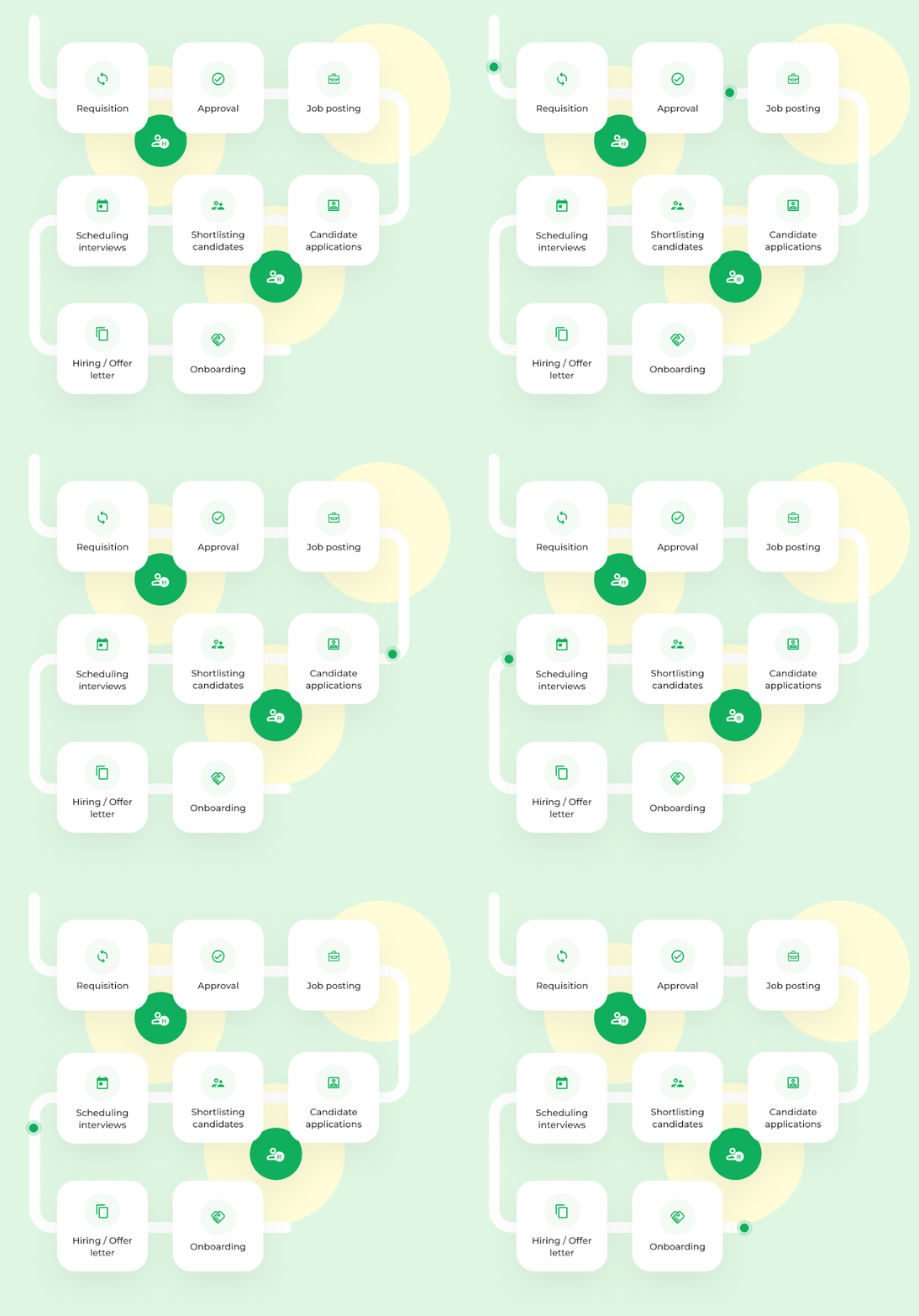
Talentera’s smart recruitment platform is a strategic partner for the Middle East retail sector, offering comprehensive solutions tailored to the industry’s complex needs. It combines advanced technology, AI, and deep labor market insights. Its advanced tools and features include:
- Attractive, customizable career portals: Talentera enables companies to create professional and appealing portals that reflect their brand identity and unique culture, with full customization options, including videos and high-quality images, creating a strong first impression and attracting top talent aligned with company values.
- Multi-company and franchise management: Talentera allows retail businesses managing multiple brands or franchises to post jobs through a unified portal, simplifying recruitment management while preserving each brand’s unique identity, ensuring consistency across all entities.
- Multi-channel talent sourcing: Talentera supports posting jobs across multiple channels, including the company’s career portals, external job boards like Bayt.com, and professional/social platforms like LinkedIn. The platform also integrates job email inboxes and automatically converts attachments into searchable candidate profiles, with full support for internal hiring and referral programs.
- Comprehensive ATS: Talentera’s ATS simplifies the hiring cycle through automated CV filtering using filters or keywords, tracking application statuses, scheduling interviews, sending notifications and invitations, and managing candidate communication through customizable message templates.
- AI-powered candidate management: Talentera’s Sanad AI Engine provides advanced CV search using four customizable criteria and weights, enabling CV-to-job description matching and color-coded rankings, with smart reports and insights. It also generates editable, complete job descriptions based on job titles and basic details.
- Smart assessment and testing tools: Talentera offers a full library of personal, technical, and psychometric skill tests, customizable surveys, and candidate scorecards. It also enables on-demand video interviews via Evalufy integration, with analysis of tone, voice, facial expressions, and language to efficiently screen large candidate pools.
- Enhanced candidate experience: Talentera focuses on simplified registration, interactive CV creation or importing/uploading, faster job browsing and application, with full mobile support and personalized notifications.
- Collaboration and data-driven decision making: The platform allows HR team members to share candidate profiles, add comments, assign tasks, and control access permissions, alongside detailed reporting on recruitment efficiency, sourcing channels, and team performance.
- Job offers and onboarding: Hiring managers can create customized job offers and request approvals easily with digital signing, while Talentera integrates with AfterHire to ensure smooth, effective onboarding.
- Flexibility and customization: Talentera offers customized plans adaptable to companies of all sizes, from SMEs to large enterprises, with fully customizable hiring workflows, job offer templates, and dashboards tailored to unique business needs without disrupting current workflows.
Discover How Talentera Can Support Your Retail Recruitment
Learn how to get the most out of Talentera for your Retail organization. Book your free demo now from here.
Book Your Free Demo NowConclusion
The future of retail recruitment is moving towards a hybrid model that skillfully combines technological efficiency with the human touch. Success in this fast-evolving sector depends on adopting advanced technologies such as AI, data analytics, and process automation. Thus, companies must invest in developing their employees’ skills to blend digital capabilities with behavioral skills, adapting to market changes and evolving customer expectations.
Before You Make Your Next Hiring Decision… Discover What Sets You Apart.
Subscribe to our newsletter to receive the latest Talentera content specialized in attracting top talent in critical sectors.